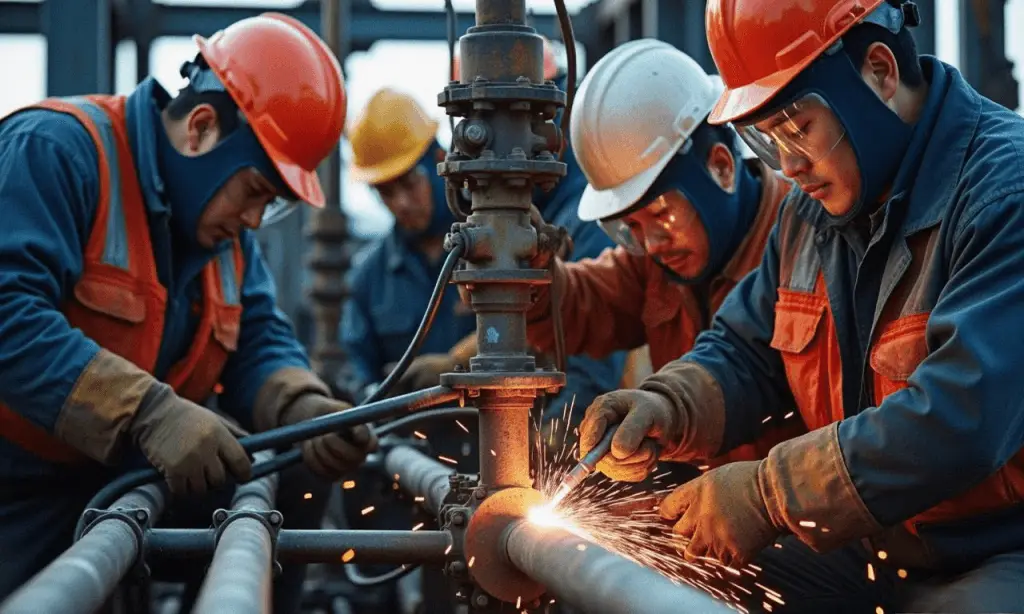
Oil rigs are among the most dangerous workplaces in the world. Yet, thousands of Filipino workers take on these high-risk jobs, drawn by the promise of high salaries that can reach up to $8,000 per month. These jobs require strength, endurance, and the ability to work under extreme conditions, often far from home.
While the financial rewards are life-changing, the work itself is physically demanding and fraught with risks, including hazardous weather, heavy machinery accidents, and even the possibility of explosions. In this article, we will explore the life of Filipino oil rig workers, the challenges they face, the benefits they gain, and why so many are willing to risk their lives for these high-paying jobs.
Filipino workers have long been known for their dedication, strong work ethic, and ability to adapt to challenging environments. These qualities make them highly sought-after in industries requiring skilled labor, including the oil and gas sector. Many oil companies hire Filipino workers for positions such as:
The Philippines has a long history of sending workers abroad, and oil rigs—whether in the Middle East, the Gulf of Mexico, or the North Sea—offer some of the highest-paying opportunities available to skilled laborers.
Oil rigs are located in remote locations, often in the middle of the ocean. Workers must deal with extreme weather conditions, high winds, rough seas, and freezing or scorching temperatures. These factors increase the risk of injuries and accidents.
Oil rigs operate with massive drilling equipment, cranes, and pipelines carrying highly flammable substances. One mistake can lead to catastrophic accidents, including fires and explosions.
Workers typically follow a "14/14" or "28/28" schedule, meaning they work 14 or 28 days straight before getting an equal number of days off. Shifts last 12 to 16 hours, with limited rest in between. The physical toll of the job can lead to fatigue-related errors, increasing the risk of accidents.
Being away from family for weeks or months at a time can take a severe emotional toll. The isolation of working on an oil rig can lead to stress, depression, and even substance abuse among workers struggling to cope with loneliness.
Working at great heights and near open water presents constant risks. A single misstep on a slippery platform can result in a worker falling into the ocean, where strong currents and cold waters can lead to drowning before rescue teams arrive.
Despite the dangers, the financial rewards are significant. The salary of a Filipino oil rig worker varies depending on experience, position, and location:
For comparison, an average office worker in the Philippines earns around $500 per month. This means an oil rig worker can earn in one month what others might take a year or more to make.
This high salary allows many workers to provide better lives for their families, buy homes, send children to good schools, and even start businesses when they eventually return home.
Becoming an oil rig worker requires specialized training. Most companies require:
Many Filipino workers find jobs through licensed recruitment agencies or directly applying to oil companies. Some of the top hiring locations include:
Some of the well-known oil companies that frequently hire include Shell, ExxonMobil, Chevron, and BP.
If you’re interested in applying, be sure to check for legitimate job postings and avoid recruitment scams that ask for upfront payments.
While oil and gas remain vital industries, there is a growing shift toward renewable energy sources. Some experts predict that oil drilling jobs may decline over the next few decades as countries invest more in wind and solar energy.
However, for now, oil rig jobs continue to provide high salaries and opportunities for skilled workers willing to take on the risks. Some Filipino workers are even transitioning to offshore wind energy projects, which offer similar pay but with lower safety risks compared to traditional oil rigs.
For many Filipino workers, the chance to earn up to $8,000 per month is worth the physical and emotional toll of working on an oil rig. While the risks are undeniably high, the financial benefits allow them to provide better lives for their families, secure their futures, and eventually move on to less dangerous jobs.
However, workers must be fully aware of the dangers and properly trained before stepping onto an oil rig. If you’re considering a career in offshore drilling, make sure to weigh the risks against the rewards and invest in the necessary training to stay safe on the job.
This article is for informational purposes only and does not constitute financial or career advice. Working on an oil rig involves significant risks, including serious injury or death. Anyone considering a career in offshore drilling should undergo proper training and research job opportunities through legitimate sources.
Ethan
|
2025.04.02